A Beginner's Guide to Electronics- III
Understanding Diodes: A Beginner’s Guide to Electronics
Have you ever wondered how electronic devices control the flow of electricity? Enter the diode – a fundamental component that plays a crucial role in countless electronic circuits. In this guide, we’ll dive into the world of diodes, exploring their functions, applications, and how they work.
What is a Diode?
At its core, a diode is a semiconductor device that allows current to flow in one direction while blocking it in the opposite direction. It consists of two terminals: the anode and the cathode. The diode symbol resembles an arrow pointing towards a line, with the line representing the cathode side.
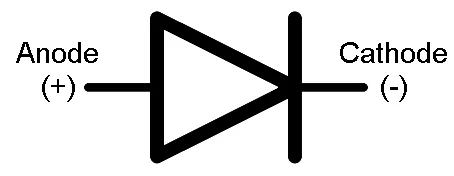
Diode
How to Connect a Diode in a Circuit
Connecting a diode in a circuit is straightforward. When placed in the correct direction, current flows through the diode, enabling it to perform its intended function. However, if connected in reverse, the diode blocks the flow of current.
| Image 1 | Image 2 |
|---|---|
 |  |
What is a Diode Used For?
Diodes find applications in a wide range of electronic circuits, serving various purposes:
Sound Effects Clipping: By employing diodes in parallel in opposite directions, they create clipping effects, producing overdrive sound effects used in guitar pedals.
Converting AC to DC: Diodes are crucial in converting alternating current (AC) to direct current (DC). Rectifier diodes, arranged in a bridge configuration, facilitate this conversion in power supplies.
Protection from Voltage Spikes: Diodes safeguard sensitive components from voltage spikes by allowing excess current to bypass them.
How Does a Diode Work?
A diode operates based on the principle of a PN junction, formed by combining positively and negatively doped semiconductor materials. At this junction, a depletion region emerges, acting as an insulator that prevents current flow.
When a positive voltage is applied across the diode, from the anode to the cathode, the depletion region shrinks, enabling current flow. Conversely, applying voltage in the opposite direction expands the depletion region, blocking current flow.
Testing Diodes with a Multimeter
Multimeters equipped with a diode function allow you to test diodes and measure their forward voltage. By connecting the positive test lead to the anode and the negative test lead to the cathode, you can determine the forward voltage of the diode.
Things to Note About Diodes
- Diodes require a minimum voltage in the forward direction to conduct.
- They have current limitations and exhibit leakage current in the reverse direction.
- Applying excessive reverse voltage can cause diodes to break down.
Types of Diodes
Diodes come in various types, each tailored to specific applications:
- Signal Diode
- Rectifier Diode
- Zener Diode
- Light-Emitting Diode (LED)
- Schottky Diode
- Photodiode
- PIN Diode
Each type possesses unique characteristics suited to different tasks, from signal processing to light emission.
Conclusion
Diodes are essential components in electronic circuits, enabling precise control of current flow and facilitating a myriad of functions. Understanding their principles of operation and applications is key to mastering electronics. So, the next time you encounter a diode in a circuit diagram, you’ll know its role and significance in the world of electronics. Happy experimenting!
Keep exploring, keep learning!